Theatre of the Oppressed
Theatre of the Oppressed as a Feminist Tool Against Gender-Based Violence
Durga itself emerged from the principles of Theatre of the Oppressed (TO). Priya, the founder of I’m Every Woman Trust, had long worked with TO and recognised its transformative potential for community engagement and gender justice. Her experience with theatre and particularly TO, shaped how Durga came to see prevention not as awareness-raising alone, but as collective action.
To end GBV, it was imperative that we used a simple and effective tool that was preventive rather than punitive, one that encouraged people to take responsibility for building safer communities rather than relying on enforcement systems that reproduce the same hierarchies and violence we seek to dismantle. We were looking for a way to involve people directly, to move beyond the comfort of commenting from the sidelines, “she could’ve done this” and “they could’ve done that”, and instead create spaces where people could rehearse what action and solidarity might look like.TO offered precisely that: an embodied, participatory method that enables people to imagine and practice interventions before harm occurs.
Developed by Augusto Boal in the 1970s, TO was designed as a tool for liberation, rooted in the belief that education and art could transform rather than reproduce systems of domination. It challenges the idea of a passive learner or audience, proposing instead the spect-actor — someone who both observes and acts, capable of transforming the reality before them. Through exercises, image theatre, and forum theatre, participants identify and interrogate real-life oppressions, experiment with alternative responses, and rehearse the possibilities of change. The body becomes a site of knowledge production, an “alternative language” through which people express and reshape lived experiences of power. (Clark, 2009)
This approach resonates deeply with feminist pedagogy, which values relationality, critical reflection, and the co-creation of knowledge (hooks, 1994). As Donna Haraway (1988) argues, all knowledge is situated — emerging through lived, affective, and discursive practices. By foregrounding the expressive body and personal experience, TO validates the partial and embodied nature of feminist knowing. It helps participants see how systems of power are reproduced not only externally, but also internally, in the stories we tell, the gestures we repeat, and the silences we inhabit.
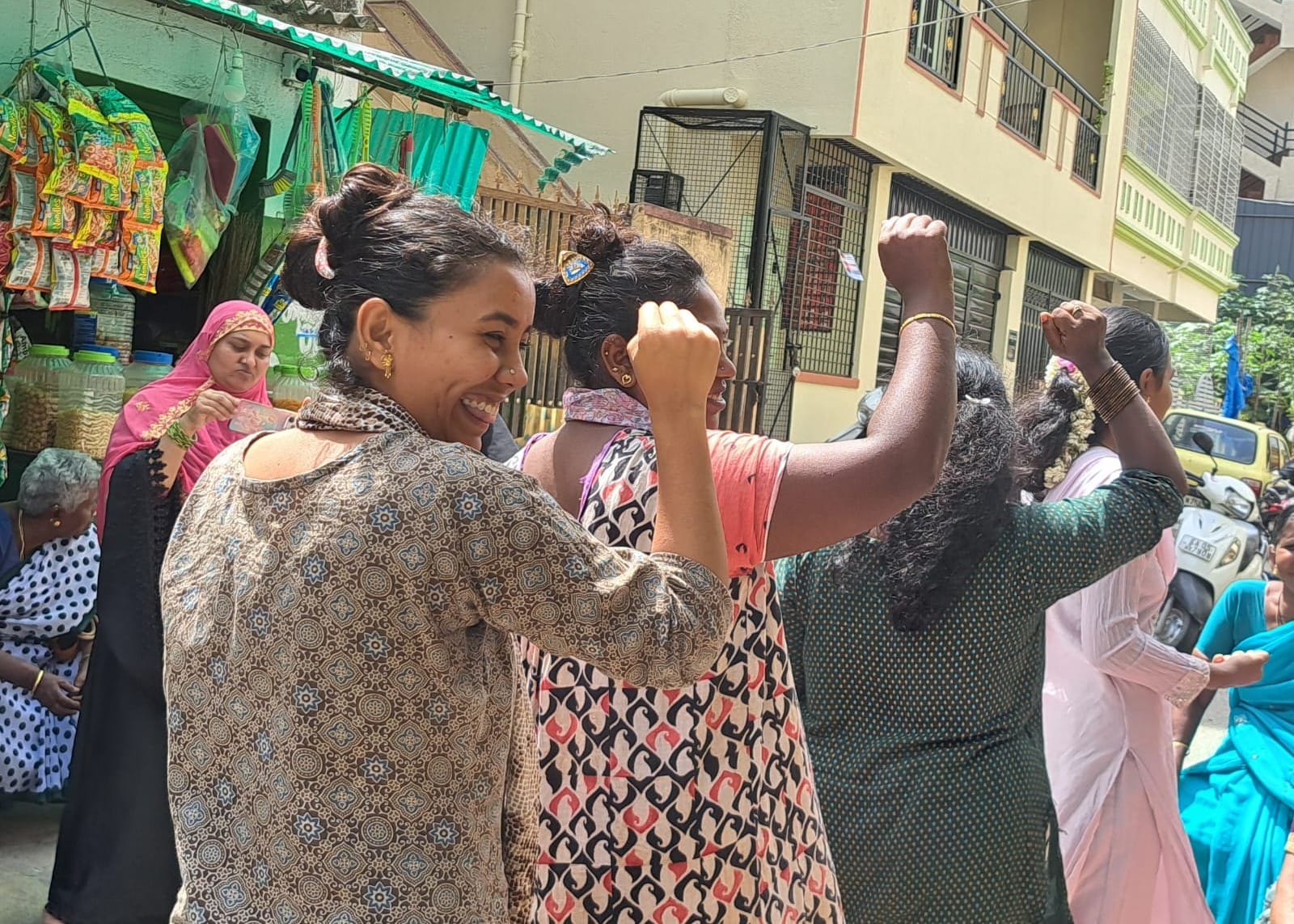
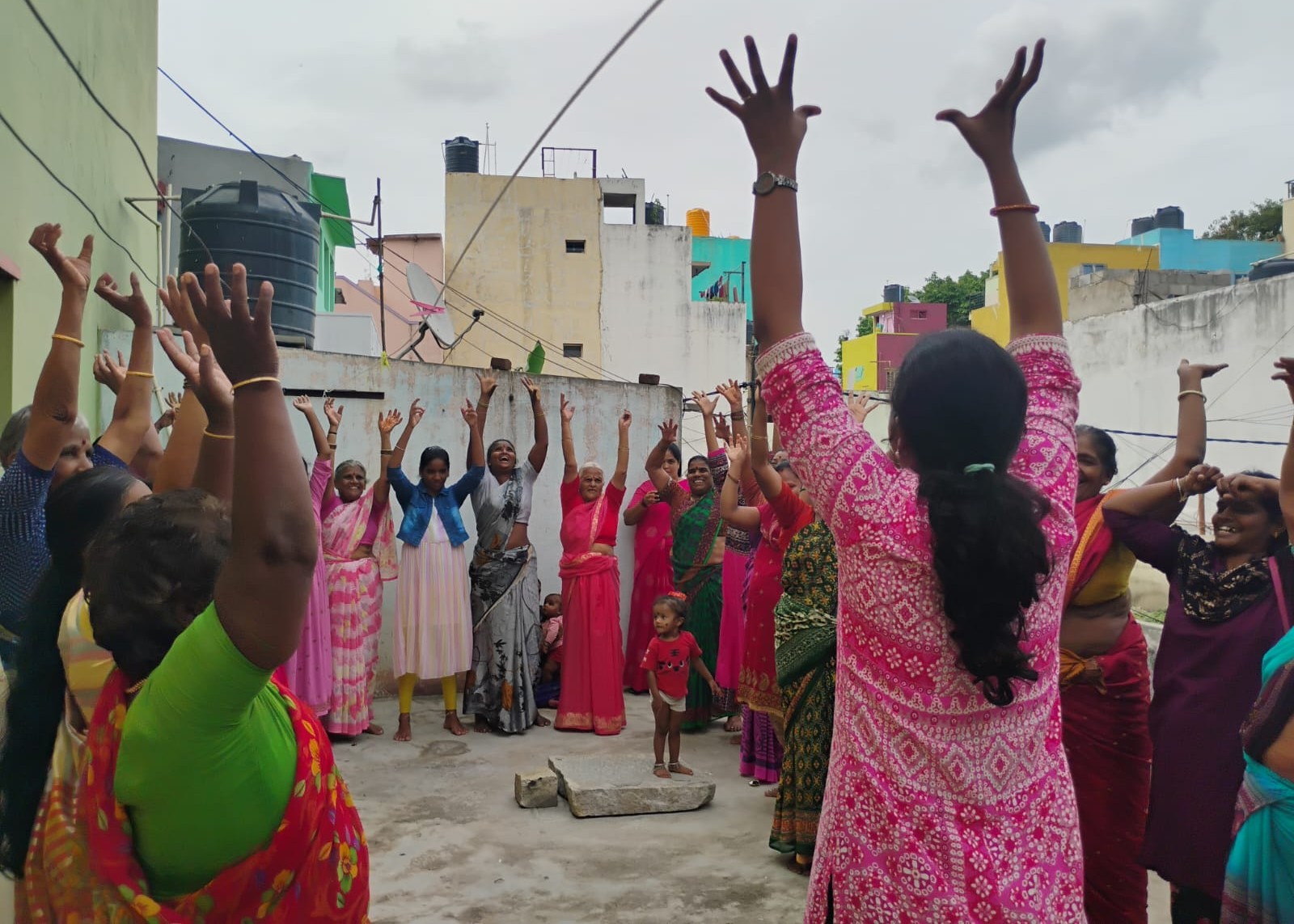
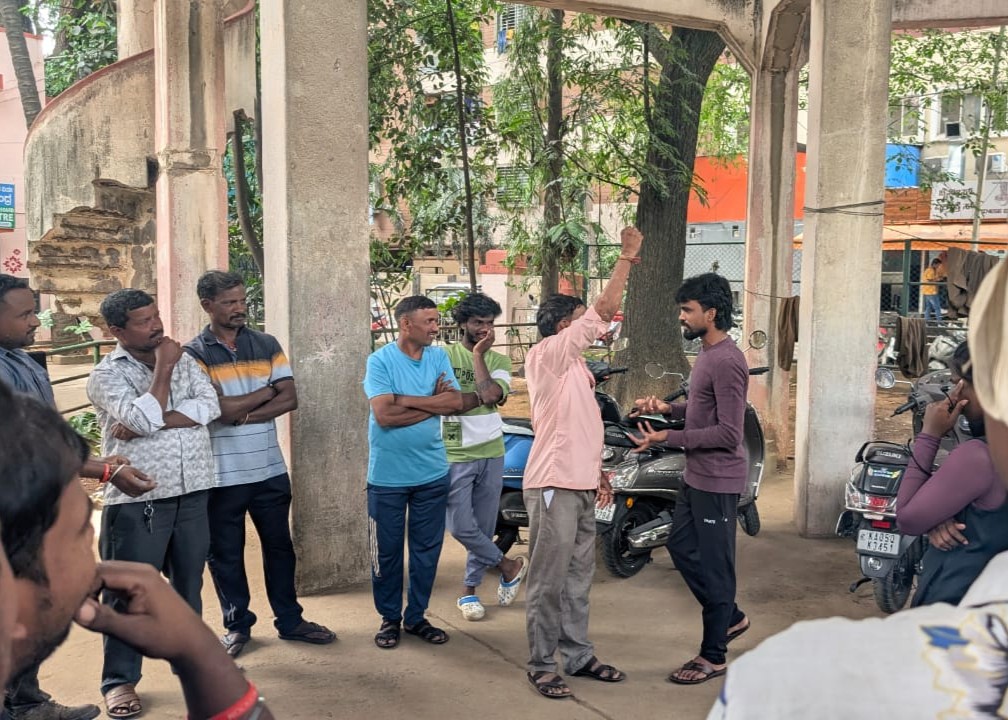
At Durga, this theory becomes practice. Our sessions invite participants to explore how gender, power, and safety are felt and enacted in everyday life. Using different tools of theatre, they revisit real situations of tension or violence and collectively experiment with alternative responses. These exercises surface internalised norms and reveal how fear, silence, and complicity can live in the body — but they also allow participants to rehearse courage, to test what intervention and care could look like. In this way, Durga transforms the abstract idea of “bystander intervention” into a lived, embodied practice of solidarity. By engaging communities in participatory, reflective, and action-oriented processes, Durga realises TO’s feminist promise: that through collective embodiment and dialogue, people can unlearn internalised hierarchies, reclaim agency, and co-create safer, more just spaces.This program is dedicated to ensuring workplaces are safe, nurturing, and enabling for women and girls. Sexual harassment remains one of the most significant deterrents to women’s participation in the workforce, especially in the informal sector, where protections are weakest. Through this program, women gain the tools to:
- Understand the structures of Brahmanical patriarchy and how these shape power and exclusion in the workplace
- Build awareness of human rights and labour rights in the context of informal work.
- Address mental health challenges stemming from harassment, discrimination, and unsafe environments.
- Critically examine and dissect power relations to recognise, resist, and abolish harmful dynamics at work.
As a result, women learn not only how to identify and address sexual harassment and gender-based violence but also how to hold their ground in unsafe environments, demand accountability, and advocate for structural change. Without systemic reforms, women will continue to face exclusion, workplace bias, and violence, preventing them from reaching their full potential. Workplace safety is not only a matter of protection, it is fundamental to achieving economic justice for women.
Collaboration
Organisations and individuals can partner with us to integrate Theatre of the Oppressed (TO) into their gender justice work. We co-design participatory interventions and performances that engage communities to recognise, question, and transform everyday power dynamics.
Capacity Building
We offer tailored training and workshops that build participants’ capacity to use TO as a tool for dialogue, reflection, and action. Through experiential learning, we equip facilitators, educators, and community leaders to apply TO methods for gender equity and social change.